AI adoption is already reshaping organisations across sectors. This lecture series examines what that means in practice for management, governance and organisational performance.

Delivered by Patrick Shields, PhD researcher in the Department of Organisation and Professional Development, the series draws on current research into behavioural and strategic barriers to AI adoption in SMEs, alongside senior leadership experience in industry.
Rather than focusing solely on tools or technology, the series positions AI as a management and organisational change issue. Sessions explore governance and risk, leadership and change management, organisational behaviour, strategy and operations, and the evolving implications for HR practice.
The schedule of sessions is outlined below, along with recordings and resources from earlier sessions.”
Upcoming Sessions
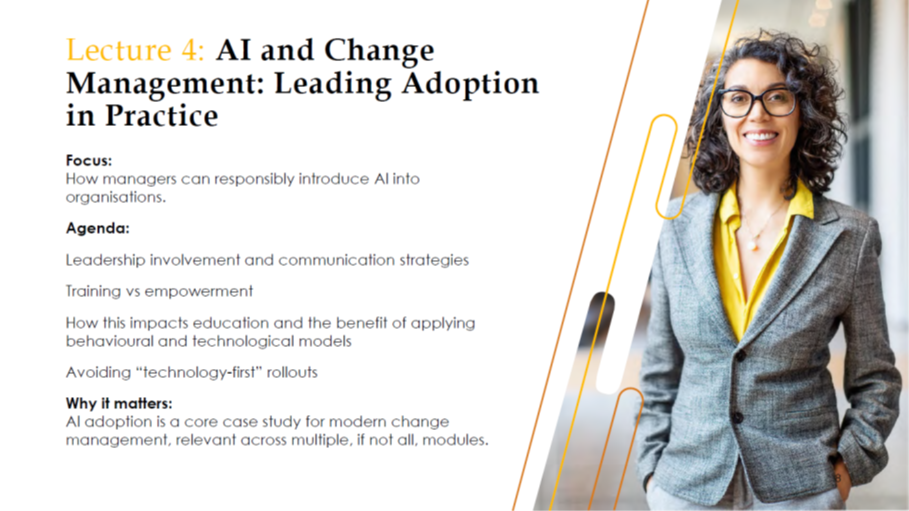
AI and Change Management: Leading Adoption in Practice
Tuesday, 14 April - 10:00–11:00 Description This session focuses on how managers can responsibly lead AI adoption within organisations. It explores the importance of leadership involvement, effective communication and moving beyond training toward genuine empowerment. The session also highlights the value of integrating behavioural and technological models, and the risks of “technology‑first” rollouts. AI adoption is presented as a core case study in modern change management, relevant across multiple disciplines. |
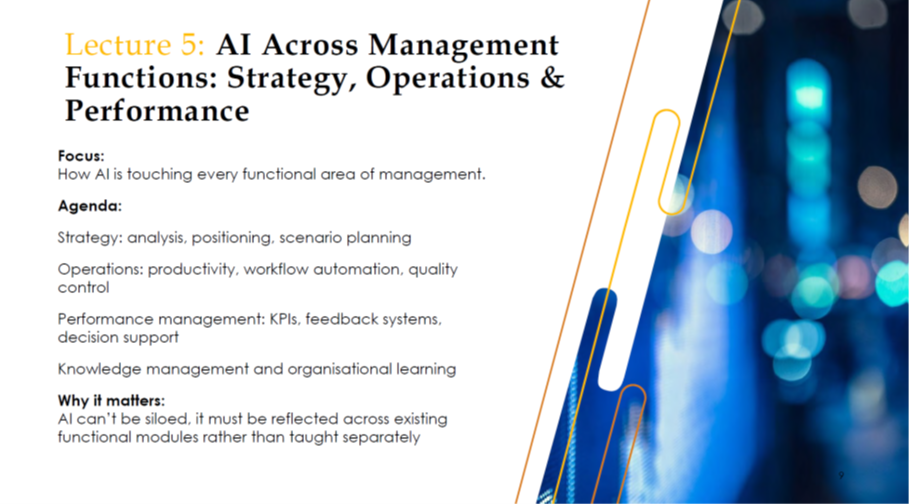
AI Across Management Functions: Strategy, Operations and Performance
Tuesday, 21 April - 10:00–11:00 Description This session explores how AI is influencing every major management function, from strategic analysis and scenario planning to operational efficiency, workflow automation and quality control. It also examines how AI is reshaping performance management, decision support, knowledge management and organisational learning. The session highlights why AI can no longer be treated as a standalone topic, but must be integrated across existing functional modules and professional practice. |
AI and Human Resource Management: Skills, Roles and Careers
Tuesday, 28 April - 10:00–11:00 Description This session explores how AI is reshaping HRM practice and people management. It examines its impact on skills assessment, workforce planning, recruitment, performance and development, as well as the evolving roles of managers and professionals. The session also considers key ethical and trust issues that arise as AI becomes more embedded in HR processes. |
.jpg)
Previous Sessions
AI Adoption in Industry: From Tools to Reality
Tuesday, 24 February 2026, 10:00–11:00 Description This session provides an overview of how AI is being adopted across industry and the behavioural, organisational and managerial factors shaping its impact. Drawing on current research and real-world practice, it outlines the challenges, opportunities and skills needed as AI becomes part of everyday work. Resources: |
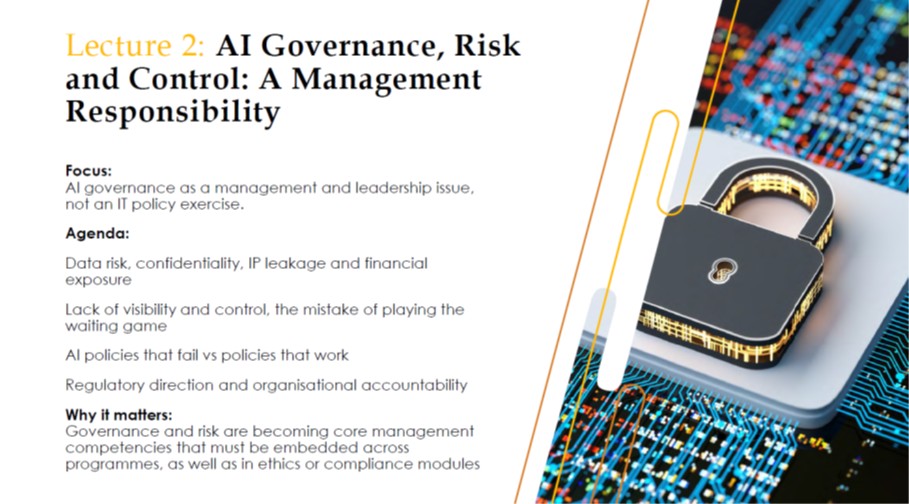
AI Governance, Risk and Control: A Management Responsibility
Tuesday, 3 March 2026, 10:00–11:00 Description This session explores AI governance as a core management and leadership responsibility rather than an IT function. It examines key risks including data exposure, confidentiality, IP leakage and organisational visibility, and outlines why delaying action increases vulnerability. The session also highlights what effective AI policies look like, emerging regulatory expectations, and the growing need for governance and risk competencies across management and professional programmes. Resources: |
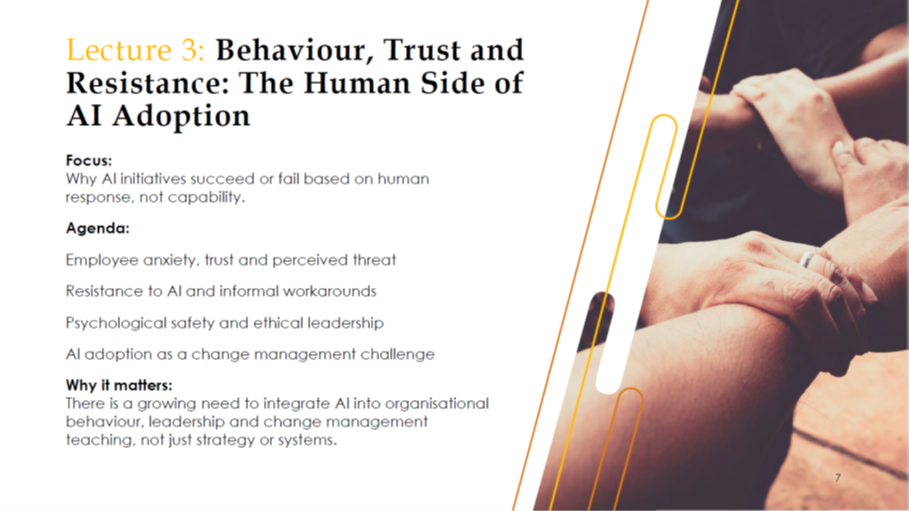
Behaviour, Trust and Resistance: The Human Side of AI Adoption
Tuesday, 10 March 2026, 10:00–11:00 Description This session examines why AI initiatives succeed or fail based on human response rather than technical capability. It explores employee anxiety, trust, perceived threat and the informal workarounds that emerge when adoption is poorly managed. The session also highlights the importance of psychological safety, ethical leadership and understanding AI adoption as a change management challenge, reinforcing the growing need to integrate these themes into organisational behaviour and leadership teaching. Resources: |